07 Jul 2026
Market News
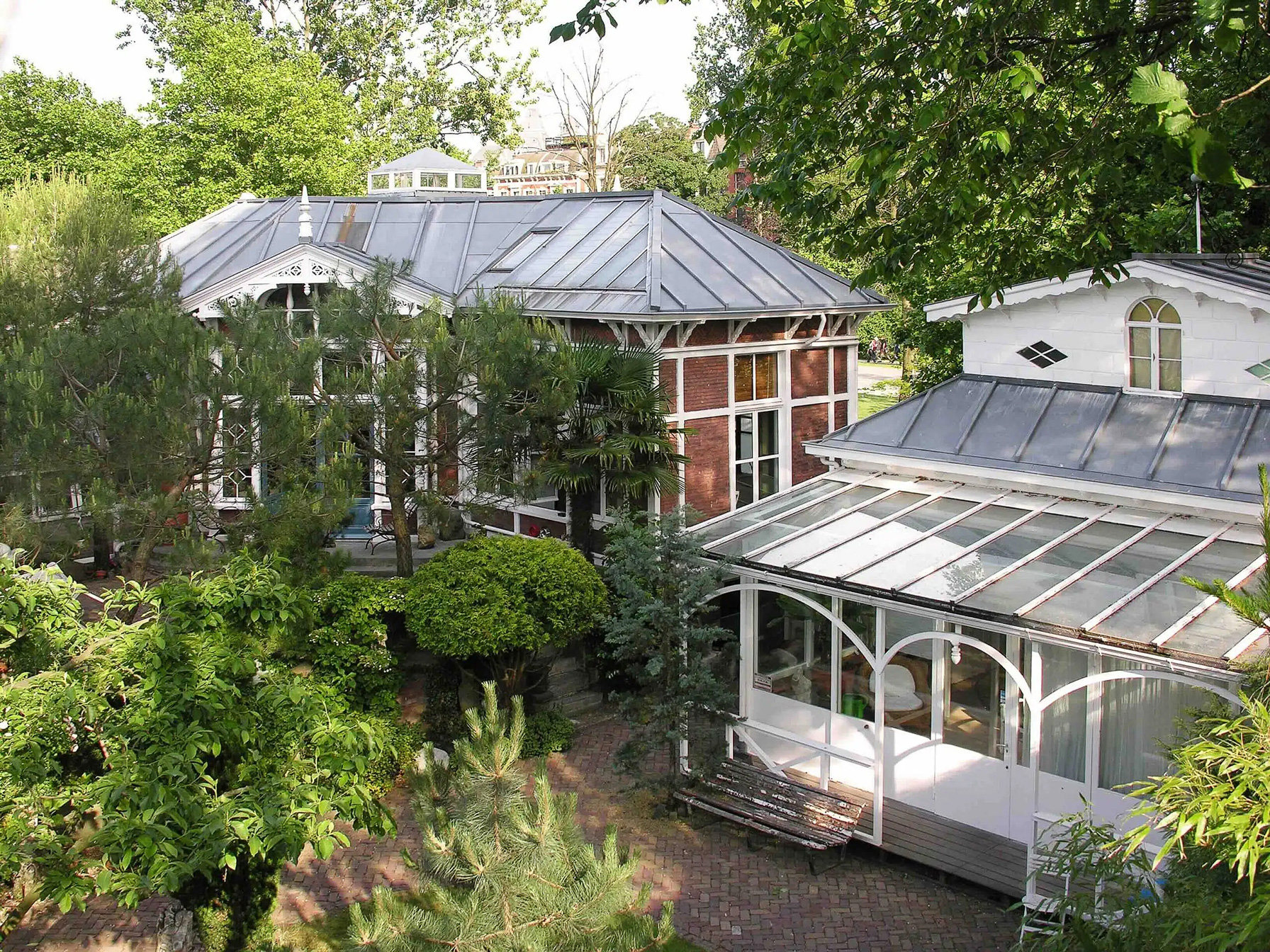
Image Credit: DSTRCT Real Estate
Just moments away from the concentric rings of waterways that draw millions of visitors to Amsterdam each year, and on the edge of Vondelpark, where tourists and locals seek sanctuary among 120 acres of greenery, rose gardens, playgrounds and ponds, sits a 19th-century former orangery that feels like a botanist’s dream. Now it’s waiting for a buyer to turn it into a one-of-a-kind luxury residence.
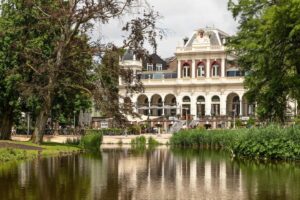
The property is moments from Amsterdam’s Vondelpark—the city’s favorite public green space—where its landmark Italian Renaissance-style Pavilion has held court since the late 19th century.
Image Credit: Shutterstock
Hidden away on Zandpad, the narrow street that runs along the north side of the park, this soaring 322-square-meter (3,466-square-foot) house was commissioned in 1890 as an orangery by a wealthy shipping company director to shelter his rare and precious plants from biting winters. Designed in chalet style, the timber-framed building has ceiling heights of almost four meters and huge glazed elevations that provide those residing here—human or plant—with extraordinary natural light.
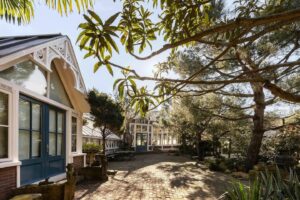
Over 850 square meters of lushly planted gardens surround the home.
Image Credit: DSTRCT Real Estate
In the mid 20th century, the municipality made the property available to artists, including the sculptor John Rädecker, who used it as his home and studio while he worked on the National Monument that has stood in Dam Square since 1956. Now lived in by Rädecker’s son, the property—which, beyond the five-bedroom, three-story main house, includes a separate one-bedroom garden studio—is for sale for the first time in its history.
There’s a pared-back, mid-century feel to the interiors, with their wooden floors, large timber-framed windows and abundant plants. The green staircase that spirals through the main living space adds to the intrigue of this idiosyncratic property that is surely just sitting and waiting for a Victorian explorer to return home from his travels, armed with a Wardian case packed with exotic plants.
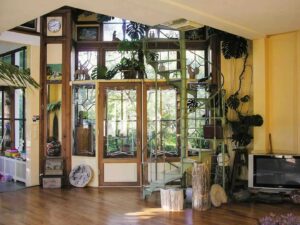
The spiral staircase cuts through the main living space that’s spread over three floors. Five bedrooms, three bathrooms. An additional one-bedroom garden house has its own kitchen and bathroom.
Image Credit: DSTRCT Real Estate
As extraordinary as the house itself are the densely planted gardens that shield it from view: 850 square meters (over 9,100 square feet) of palms, banana plants and sculpted figures emerging from the undergrowth. “It’s a hidden pearl with a tropical vibe in the city center. It could be in Indonesia,” says Michiel van der Zijden at DSTRCT, the Amsterdam-based high-end real estate agency marketing the orangery house for €9 million (around US$10.3 million), placing it firmly in the top tier of the city’s trophy listings.
“It’s a hidden pearl with a tropical vibe in the city center. It could be in Indonesia.”
Michiel van der Zijden, DSTRCT Real Estate
As is common with ‘newer’ properties in a city as old as Amsterdam, while you own the building, you pay a recurring ground lease to the municipality, who own the land beneath the house. Van der Zijden explains, however, that it is possible to pay a one-off sum—likely to be around €500,000—so that you no longer pay ground rent and the property effectively becomes freehold.
That, in itself, will add value for international high-net-worth buyers, many of whom may find the concept of leasehold land ownership odd. But the house also comes with the intrinsic rarity value of having a large garden on the edge of a UNESCO-protected canal belt in the center of one of Europe’s most densely built cities. Amsterdam was largely laid out in the 17th century, making new land available for gardens a rarity.
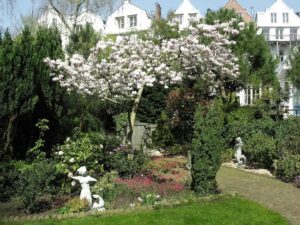
Even in Amsterdam’s nearby Museum District, gardens of this size and establishment are a rarity. It spreads across 850 square meters (over 9,100 square feet).
Image Credit: DSTRCT Real Estate
Even on the other side of Vondelpark, in the Museum Quarter, few of the old-money families and high-earning professionals who live in grand 19th-century townhouses have much in the way of private green space. Whereas on this north side, sought after by wealthy young professionals and successful creatives, few who pass by would even know this urban oasis exists.
The appeal of this property feeds into the themes that are high on high-net-worth city buyers’ wish lists too. Orangeries, once a status symbol for European aristocracy, are a glamorous accoutrement in large town or country houses. Where a genuinely historic one doesn’t exist, owners are building replicas to recreate the elegance of a past era.
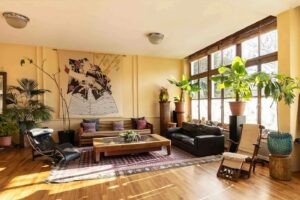
The abundance of natural light here makes for healthy species, plant and human.
Image Credit: DSTRCT Real Estate
Biophilic design is a buzzword now too. Beyond being merely an aesthetic touch, incorporating lots of greenery in a property is recognized as having tangible positive effects on our mental and physical wellbeing. An abundance of natural light, voluminous space and proximity to plants (with this house, in your own garden and a few feet away in Amsterdam’s biggest park) are all pivotal principles in neuro-architecture, which is about using provable scientific knowledge to design homes that enhance body and mind. To be, as you are here, in an urban location where you see sunlight filtered through the palms and hear the birdsong in the park is the essence of experiential luxury, which affluent buyers seek.
Orangeries, once a status symbol for European aristocracy, are a glamorous accoutrement in large town or country houses.
As temperatures reach unprecedented highs in much of Europe this summer, the coolness of a shady, green sanctuary is a far more sought-after feature than a 10-car garage. An environmental asset like this one in Zandpad helps a city with reducing urban heat and increasing biodiversity and greenery—and that carries value.
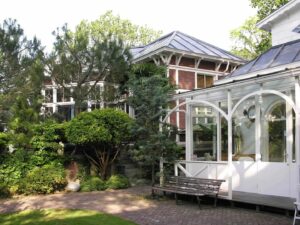
Few residences offer such privacy and greenery in the heart of an urban center.
Image Credit: DSTRCT Real Estate
This tropical oasis also offers the thing that high-net-worth buyers ask for all the time. Privacy. And having something that no one else has is highly desirable too. “Although the city-center market is fairly slow at the moment, exciting properties are selling well in Amsterdam and prices are still rising,” says Van der Zijden, whose buyers are an even split between Dutch and international, mostly from Europe and the U.S.
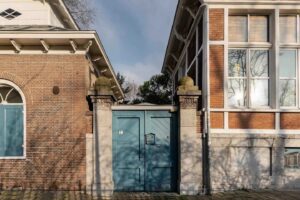
Behind the blue door is a secret green oasis in the heart of Amsterdam.
Image Credit: DSTRCT Real Estate
How the wealthy want to live in cities is changing. And a house that sits at the heart of one of Europe’s most visited cities, yet offers the tranquility, privacy and greenery of a country retreat, is a rare and exotic species indeed.
Looking for something in particular? These searches have been curated to help you find your perfect home.